

Three years after obtaining my ACMG Apprentice Ski Guide certificate, I decided to challenge the full ACMG ski guide exam. Our regular guiding jobs are great for preparing us for the challenges ahead, but they certainly aren’t enough. On the exam, you’re expected to offer a ski-mountaineering program tailored to the most capable of guests – the highest end of the guiding spectrum. And, a world-class ski product requires advanced technical training in complex terrain, from rappelling into couloirs to crossing vast icefields in 100% whiteout conditions. One thing’s for sure: examiners are hell-bent on pushing us to the edge of our capabilities, to the brink of collapse. We must be prepared for every scenario.
Related: The ACMG Ski Guide Certificate: What Does It Take?
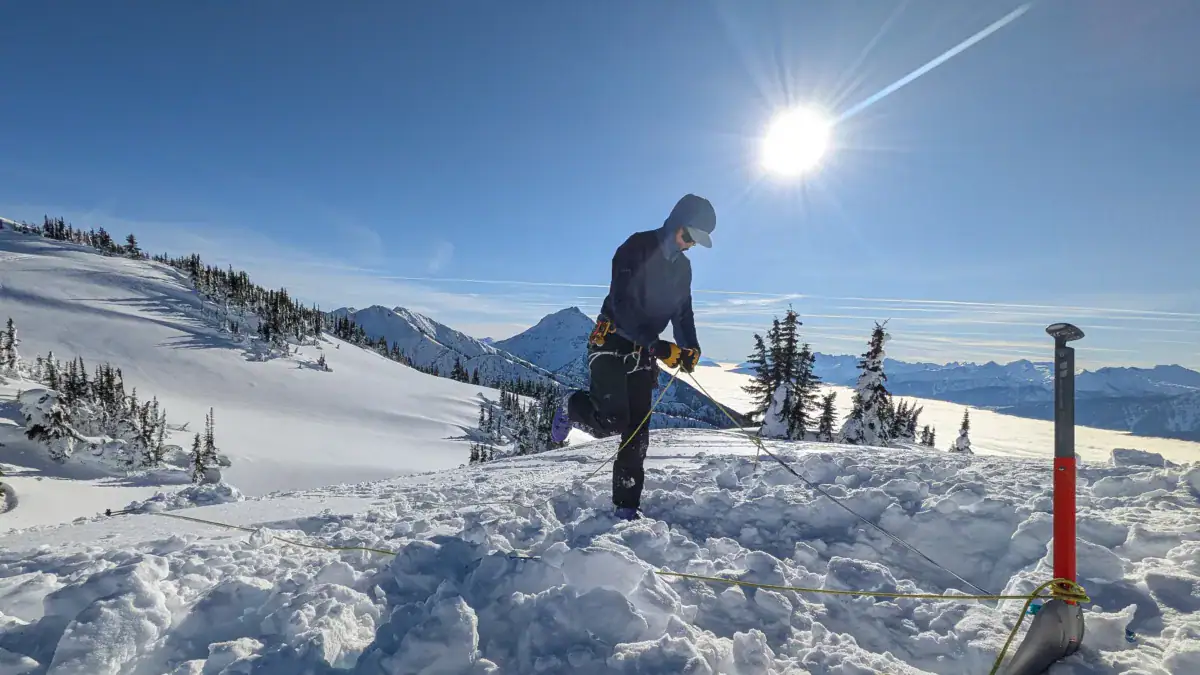
What’s The ACMG Ski Guide Exam All About
For those wondering, the ski guide exam is a 9-day, hands-on assessment of a guide’s skills on snow. It is the final milestone in the ACMG ski guide certification. Think of it as an all-around, real-world exam. Small groups of 3 to 4 students take turns leading a rotating group of examiners through complex glaciated terrain. The routes selected often include technical alpine features like couloir skiing, rappels, and roped glacier travel, with the occasional foray into the trees.
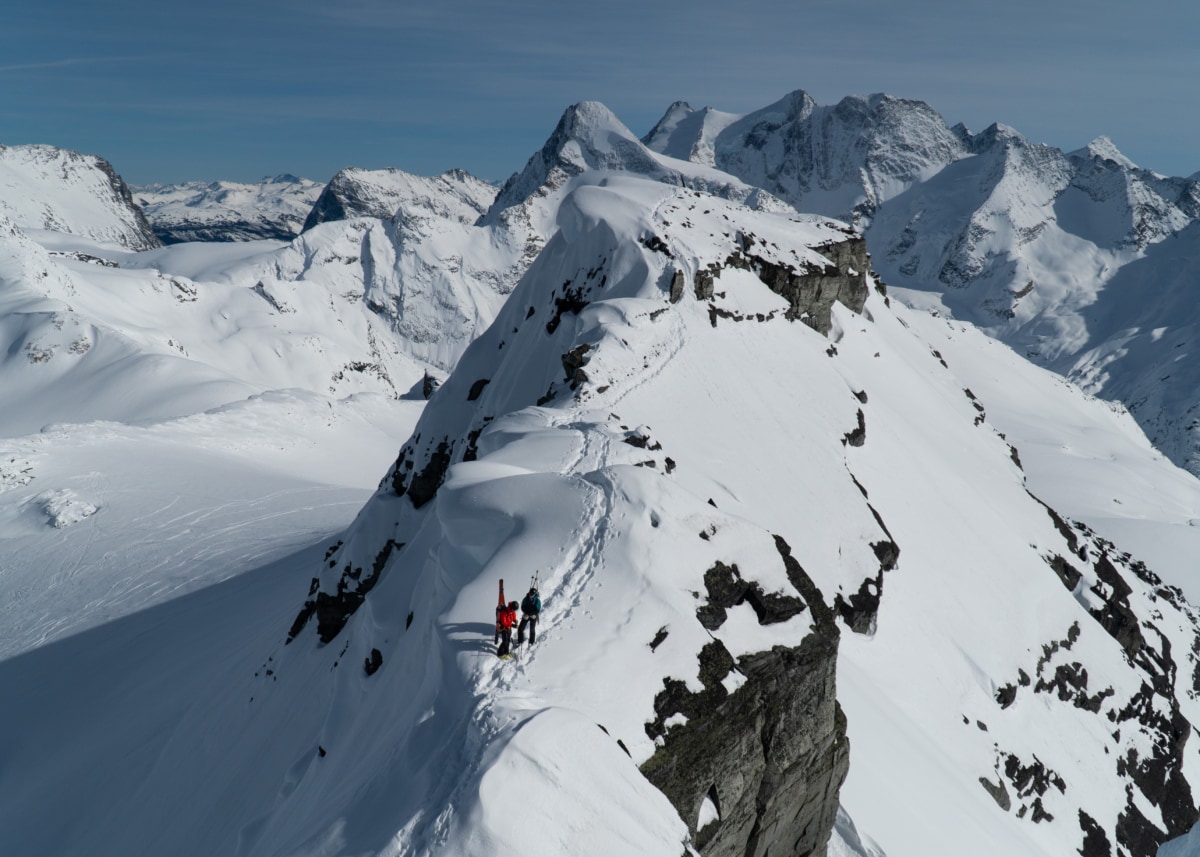
Under the examiner’s watchful eye, each student rotates through the guide role by track-setting, assessing hazards, managing the group, and coaching everyone through challenging sections. Examiners may even allow mistakes to unfold to better understand a student’s decision-making and problem-solving skills, stepping in only when it truly matters.
Keep Your Head On A Swivel
As a ski guide, you’re constantly monitoring dangers, from avalanche hazards to hidden crevasses. It all boils down to minimizing your group’s exposure to hazards while managing the guests when the hazards can’t be avoided. That’s where backcountry experience in complex glaciated terrain, leading to sound decision-making, is critical. Without a doubt, the avalanche hazard is a major player. Ski guides will spend a considerable amount of time investigating the snowpack to accurately evaluate the avalanche hazard – whether that means sticking our head in the snow or ski cutting unsupported features.
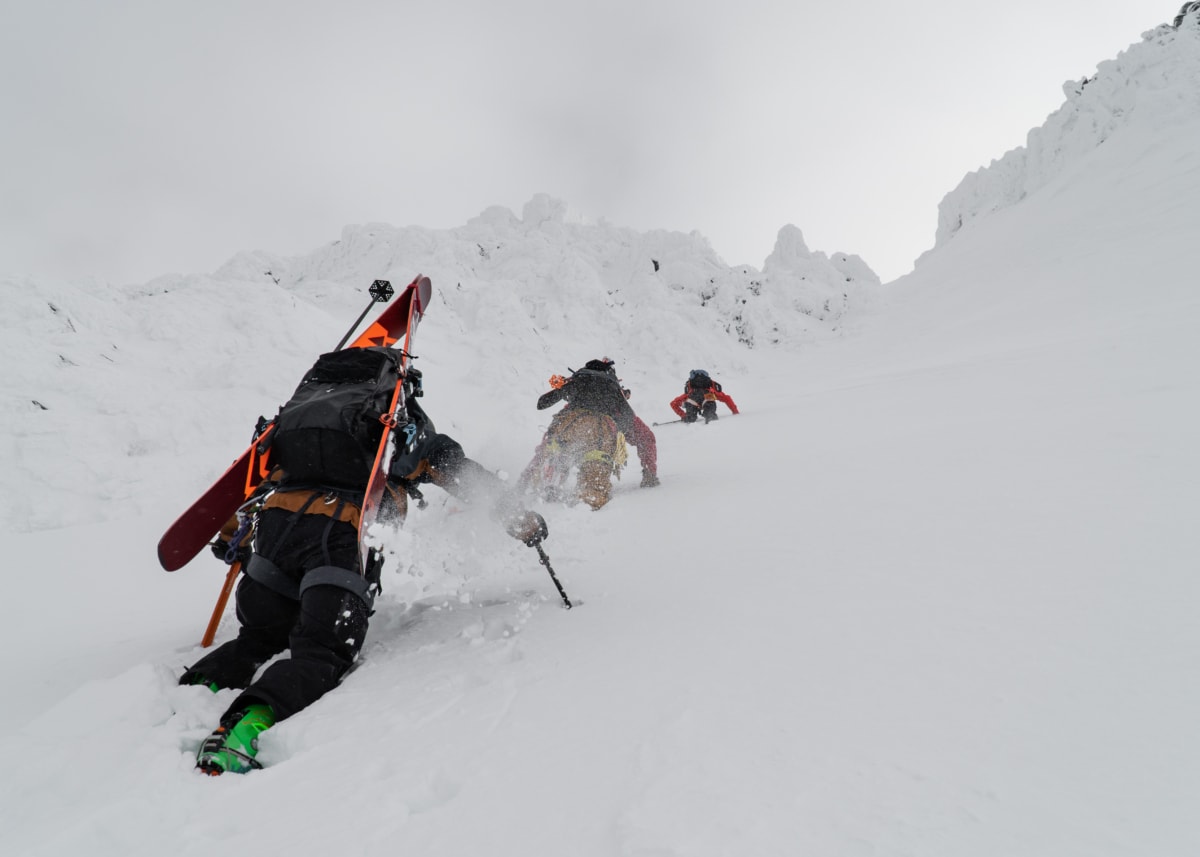
In an exam setting or at work, you’re making hundreds of small decisions, almost every minute, from where you’ll ski down to how you’ll lower guests into a couloir and where you’ll take your snack breaks. All those decisions must work in tandem to complete the objective and deliver an unforgettable experience. Guides in training spend a considerable amount of time completing challenging ski tours to test their decision-making while facing hazardous conditions. Sometimes, you just have to get creative! We’ll “mock guide” our peers and perform a debrief after each day, offering constructive criticism.
The Art Of Track-Setting
On the ACMG ski guide exam, we’re expected to master the art of track-setting, otherwise known as uptracking. You didn’t hit that bench quite right – FAIL! Your uptrack is too steep – FAIL! You didn’t flatten the corners enough for your guests – FAIL! Jokes aside, setting an uptrack as perfectly through dense forest as in convoluted, alpine terrain is challenging. Fortunately, most apprentice guides have 2-3 years of ski touring work to practice those skills. It definitely gets harder when you’ve exclusively heli-skied during your apprenticeship.

Guides aim for an uptrack incline of 12-18 degrees, striking a balance between vertical gain and energy conservation throughout the day. It’s important to maintain a consistent angle across features while minimizing direction changes. I always tell myself: “Use all the real estate you can when setting a track”. Sometimes, it’s important to climb at an aggressive incline or speed up the ascent, such as when crossing crevasse bridges or to escape from sketchy overhead hazards. Like any other guiding skillset, it all comes down to good decision-making. Guides will spend many days purposefully uptracking through difficult terrain in hopes of mastering the art of track-setting.
Nail The Downhill Lines
Like most ski guides, we track uphill to ski downhill. I genuinely love the downhill component. It’s the reason why I spend 60-70% of my winter around helicopters. The ACMG ski guide exam will test your ability to guide your group on the descent in unfamiliar terrain. After all, you’re expected to navigate thoughtfully through zones you’ve never visited before, intending to deliver the best possible ski product. With experience, guides learn how to best manage their guests while avoiding objective hazards or reducing their group’s exposure.
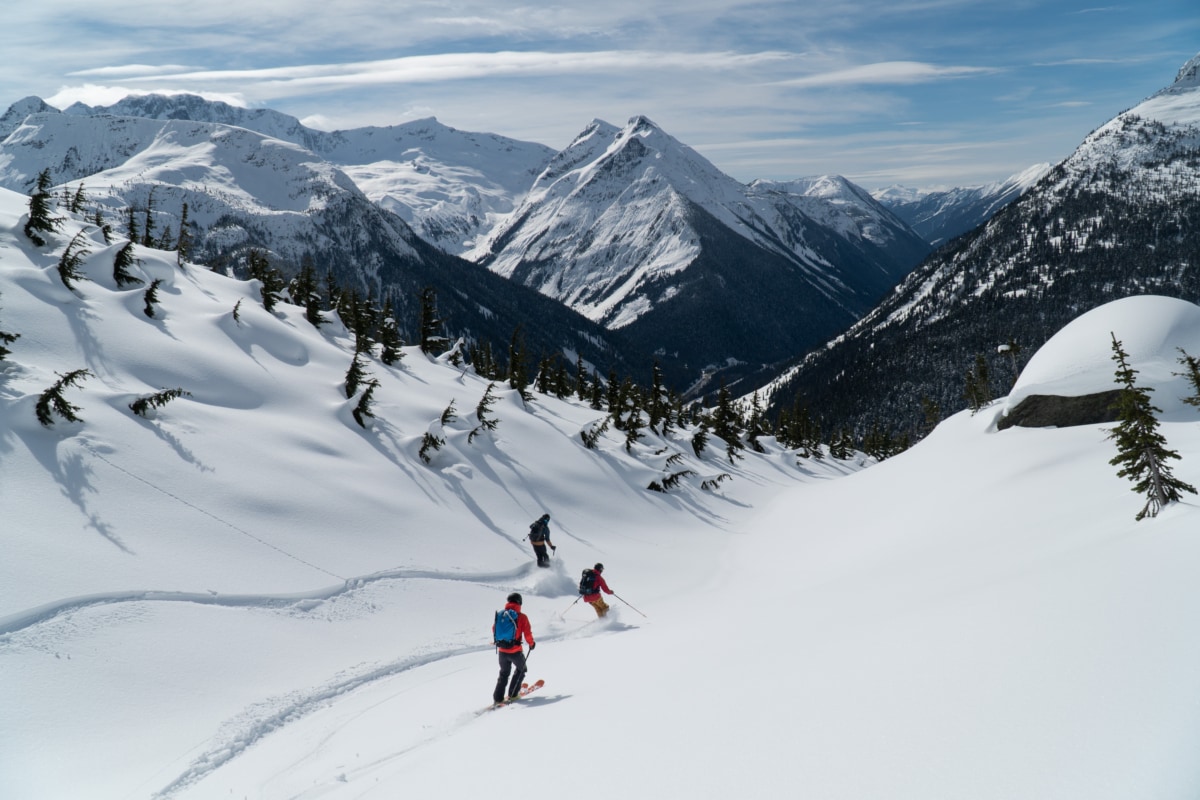
There’s no substitute for hard-earned experience. I’ve been fortunate enough to land a dream heli-ski job early in my career. Heli-skiing allowed me to dial in my downhill guiding, often skiing 10 backcountry runs. Due to Selkirk Tangiers Heli Skiing’s massive tenure, I get to explore new terrain every day and downhill guide in a variety of weather and snow conditions.
Glacier travel is one of the core components of the ACMG ski guide exam. It takes years of experience to decode glaciers and understand what’s happening underneath the snow. An unroped crevasse fall is typically our biggest concern. With much practice, guides can determine the strength of a snow bridge based on outside temperature, bridge thickness and snow hardness – sticking our probes in the snow and feeling the resistance. It’s an essential skill when you’re travelling through an icefall.
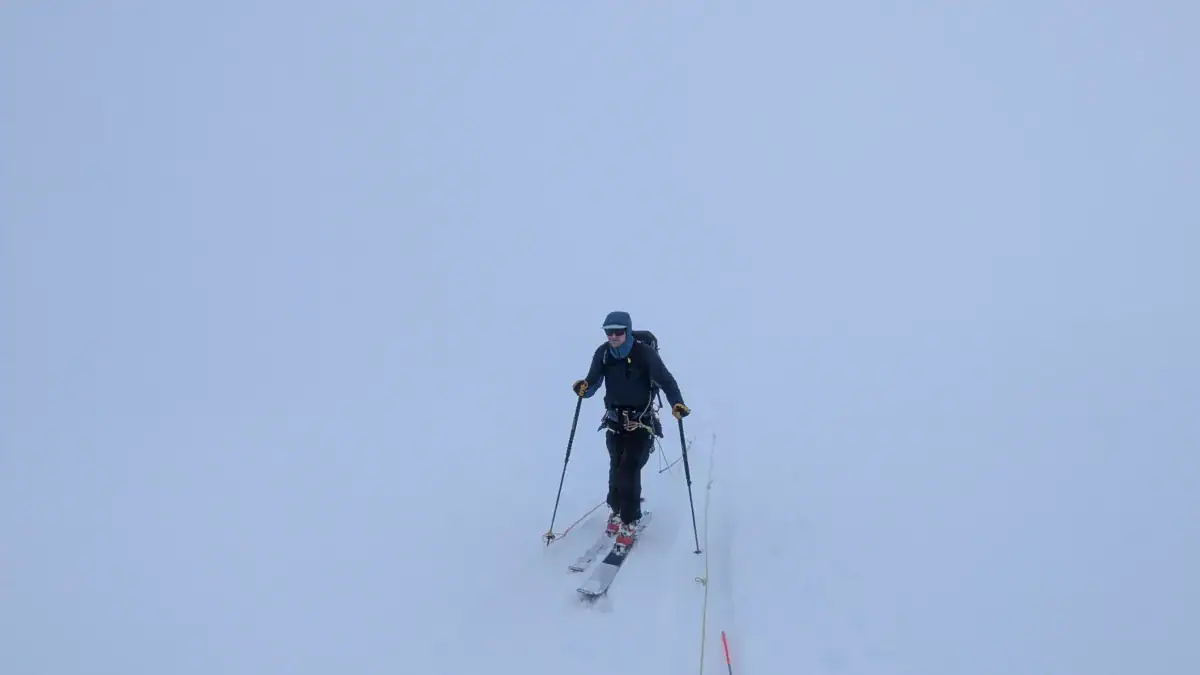
As guides in training, we’ll spend days traversing icefields in a whiteout, testing our GPS and compass-based navigation skills when we can barely see the tip of our skis. Being able to decipher a sagging crevasse bridge in poor visibility is an acquired skill. Glacier navigation is complicated and inherently high-stakes. A mistake here and you might fall into a gaping hole.
Master The Ropes
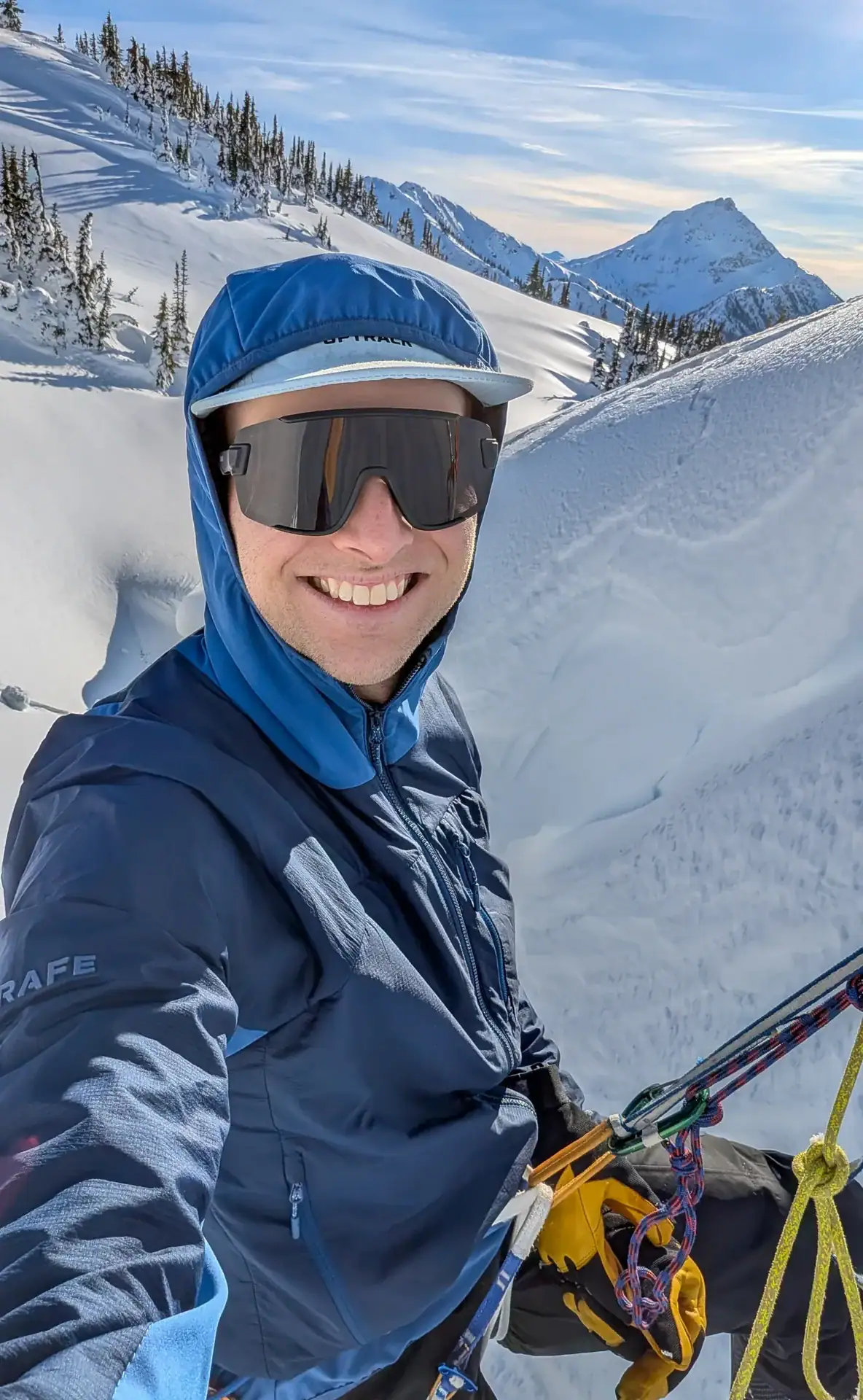
Rigging skills are thoroughly tested on the ACMG ski guide exam. We’ll often lower our group into steep lines or belay a guest scrambling on a rocky ridge. Examiners dedicate a day to testing crevasse rescue techniques using various scenarios, including an unroped fall where the victim is unconscious and a rope ascent while passing knots.
I spent several days rehearsing rigging techniques, practicing knots while watching TV and running through diverse rescue scenarios with my peers. A few examples:
- An unroped fall with an unconscious victim
- Ascending a rope with knots
- Rappelling through knots
- Drop loop and z-pulley rescue systems
- Building bomber snow/ice anchors (T-slots & V-threads)
Ever Heard Of The “Backcountry Butler”
The often forgotten component of ski guiding is client care. Sure, when we think of ski guides, we immediately think of powder skiing through an untouched white canvas. What guides don’t tell you is that 50% of our job is about caring for our clients and optimizing their experience. Examiners will judge you on quality-of-life decisions like taking a break in a sheltered location or emphasizing sunscreen use. They’ll even evaluate your coaching skills when working through challenging sections. That’s part of the game, and how a guide gets a great tip at the end of a day!
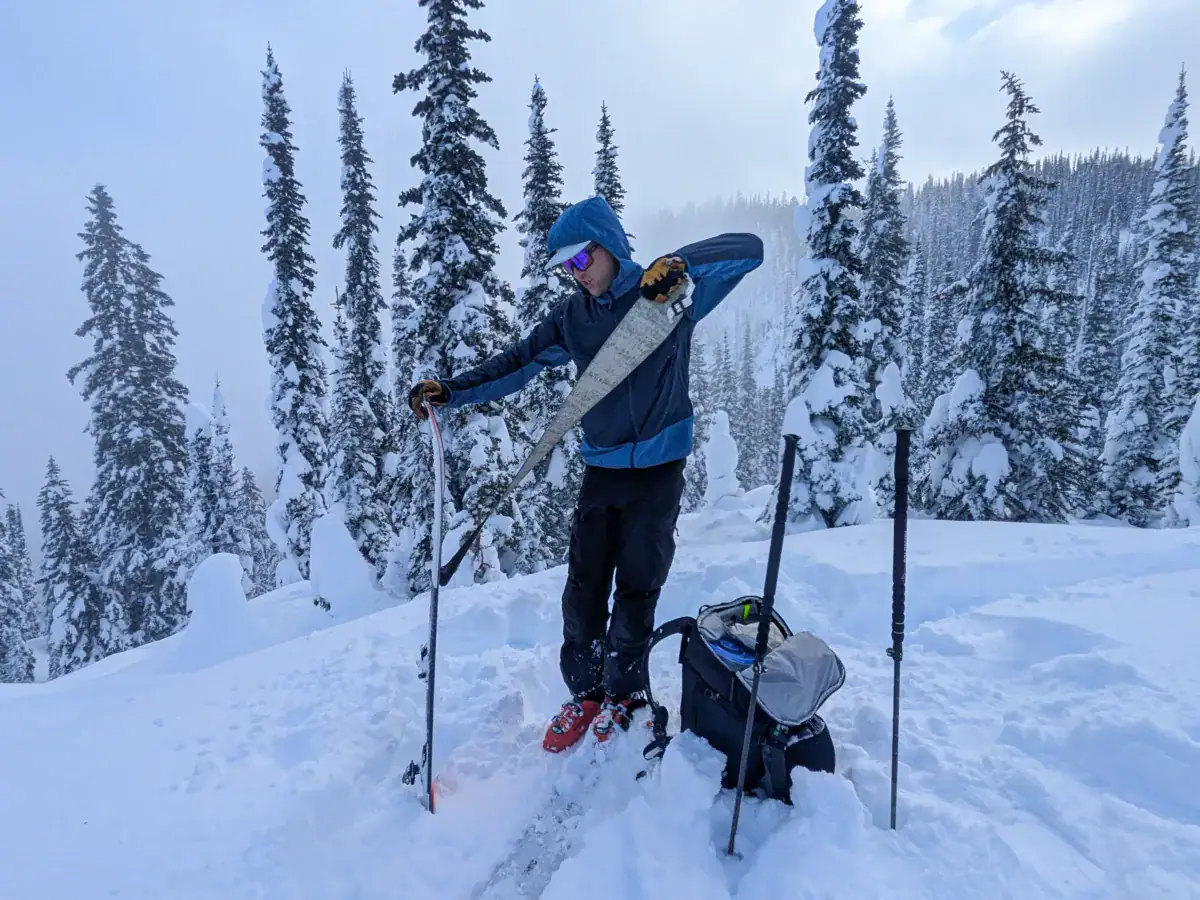
You might have to teach your clients how to remove skins on a summit while the winds are howling. You might have to sprinkle some fresh snow on an overused uptrack to increase grip. All those small things contribute to the guest experience. At the ACMG, the bar is set high.
A Note On The Ridge Active Insulator
Premium outerwear designer Strafe was kind enough to send me their cutting-edge mid-layer, The Ridge Active Insulator Jacket, for testing. I’ve now taken it on a few ski tours, through old-growth forest, on huge glaciers and far into our backcountry playground. The Ridge Insulator is the perfect replacement for my old, raggedy mid-layer, which was falling apart at the seams. The fleece lining is not only comfortable, but also provides just the right amount of insulation for winter, high-output activities like ski touring or mountaineering. The insulation is strategically placed to maximize breathability. The jacket is also incredibly light, keeping only essential features such as a hood, wrist and waist elastic cinching and a few zippered pockets. The thin, yet durable, Pertex face fabric complements its low weight while granting it some water resistance when the snow starts flying. The Ridge Active Insulator is the only jacket I need for the ascent in mild to moderately cold temperatures. Since the synthetic insulation retains warmth when wet, I simply throw on my shell layer for the descent. The jacket just looks darn good, and the athletic fit is great for my slim, 6ft build in a size medium.
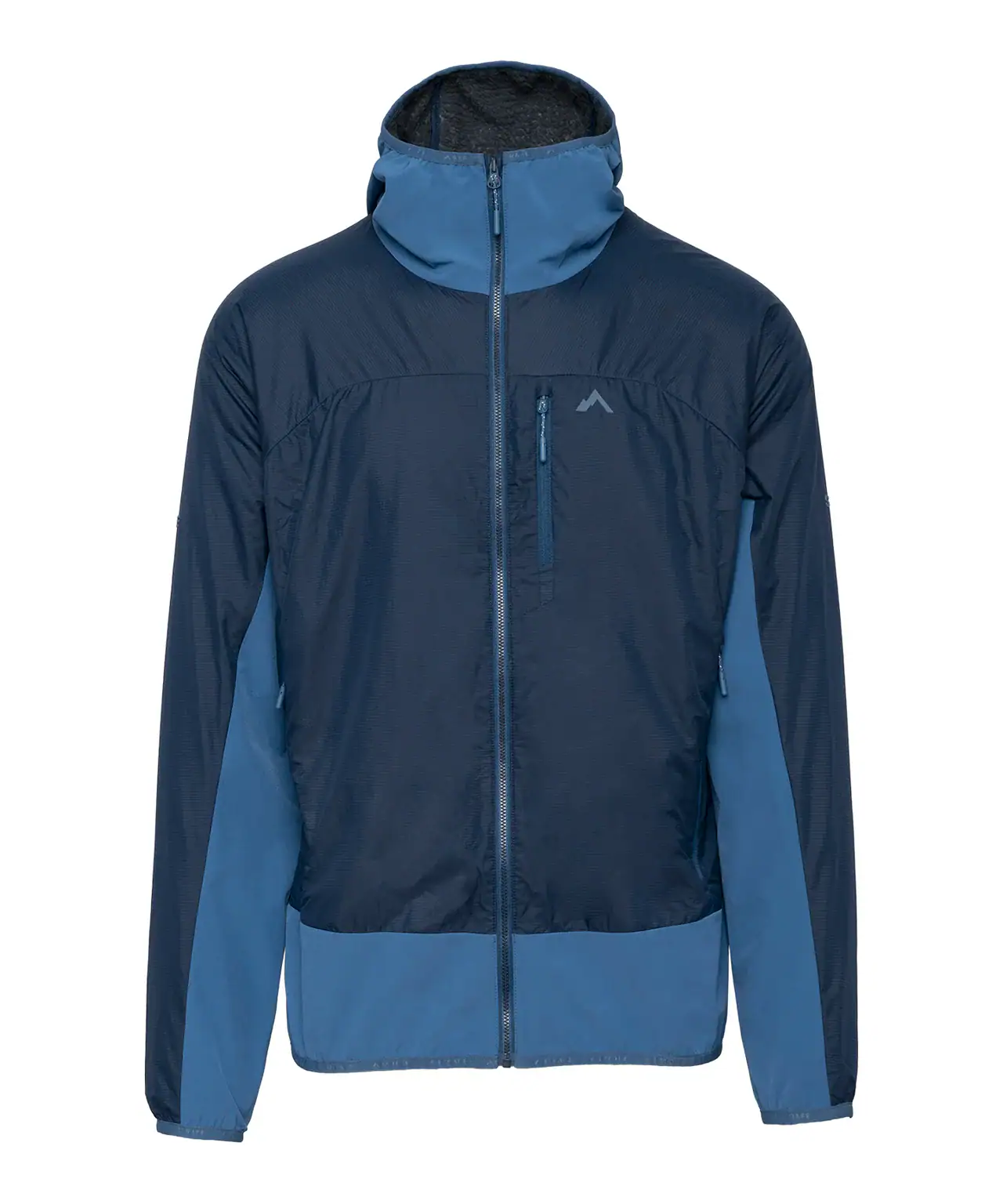
Features:
- Lightweight & air-permeable body mapped Pertex® Equilibrium NetPlus® & brrr° 4-way stretch fabrics
- Exposed body mapped PrimaLoft® Active Evolve insulation
- Fully lined integrated hood with elastic along the opening
- Zippered hand & chest pockets
- Mesh electronics sleeve inside right-hand pocket
- Elastic binding at sleeve cuffs, hood edge, & hem
- YKK® Vislon® & Regular Coil zippers
- Weight: 10.2oz/290g