
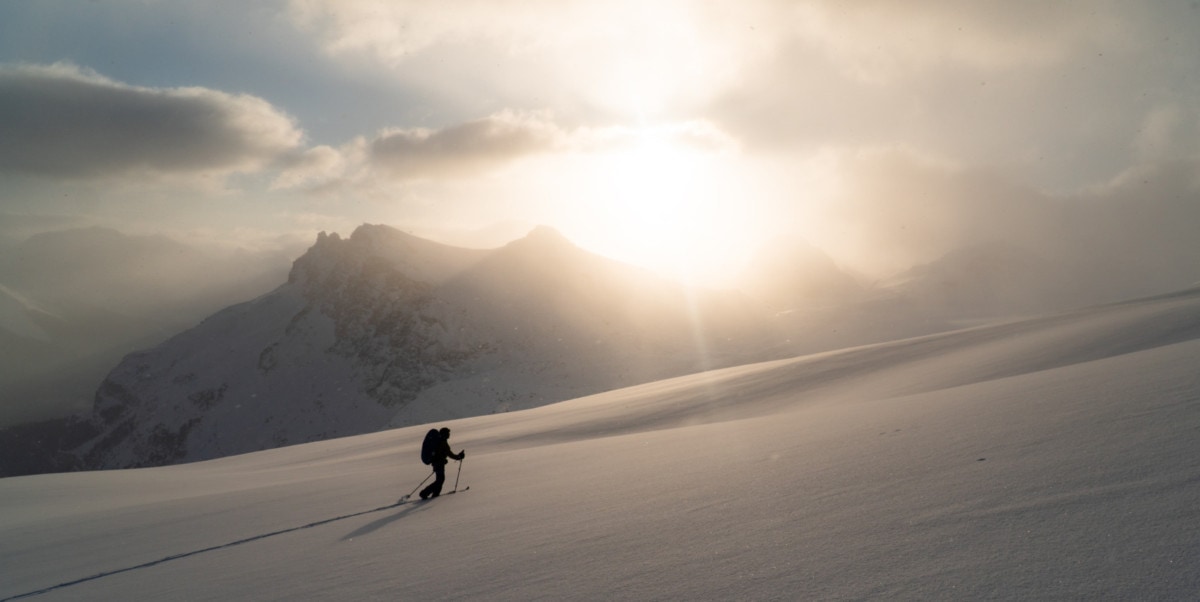
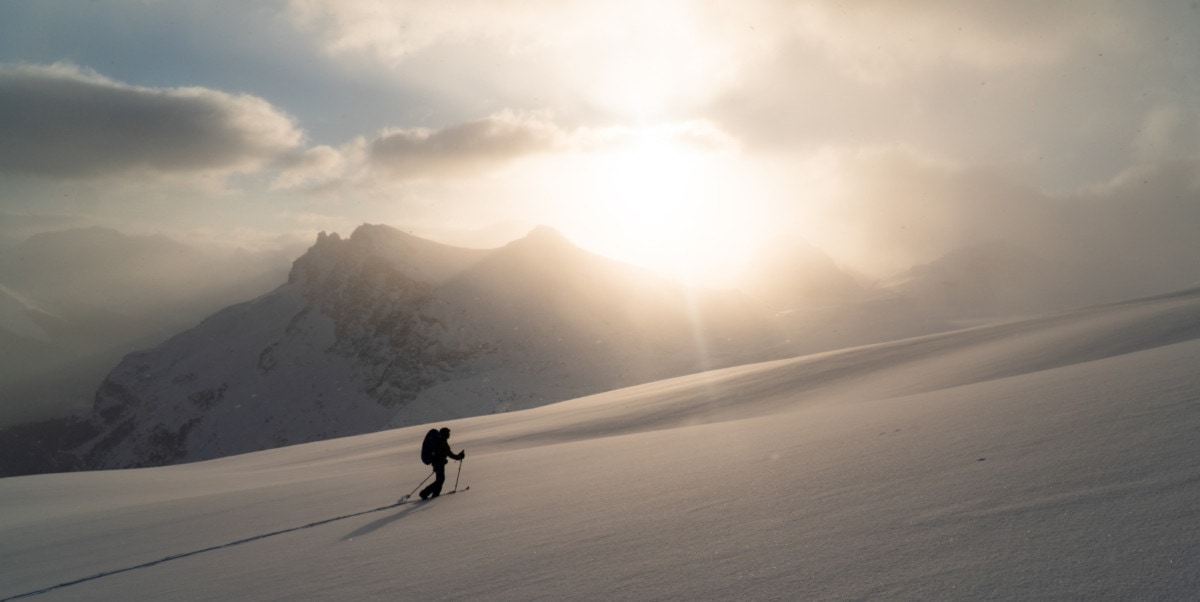
Overnight ski touring or splitboarding hut trips can seem like a daunting endeavour, but they are so worth it. Think for a second about waking up in a heated hut in the middle of an icefield with the sun casually rising above the 3000m peaks in the distance. It’s an amazing feeling! Packing for a backcountry hut trip such as the Wapta Traverse in the Canadian Rockies requires planning your gear, transport logistics, food and water intake while taking into account the glaciated route, weather and avalanche considerations. Look no further! The Uptrack has listed useful tips when it comes to packing for a backcountry hut trip, specifically geared toward the ski touring and splitboarding crowds. After years of roughing it out in a tent, I’ve come to truly enjoy the comfort of backcountry huts. You’ll find some juicy details on key gear and food planning. Supplemental to the equipment needs for a hut trip, see the link below for the essential equipment for a day tour.
Related: What To Pack For A Ski Tour: A Comprehensive Guide
The Dream Hut Trip Backpack
A large 50-60L backpack with features specific to ski touring. Most manufacturers advertise their multi-day packs for the mountaineering crowd. Thankfully, you’ll find many cross-over features that work for both ski touring, splitboarding and mountaineering. In a perfect world, I dream of a pack with the following features:
- Rope carry system (usually sandwiched between the top lid and the pack body)
- A-frame and diagonal ski carry with reinforced side straps for ski edges
- A helmet carry system that doesn’t interfere with the lid buckles
- Secure crampon and ice axe attachments
- A padded hip belt with a side pocket on one side and a gear loop on the other
- A main compartment to swallow most of the bulky gear and a large top lid for knick-knacks
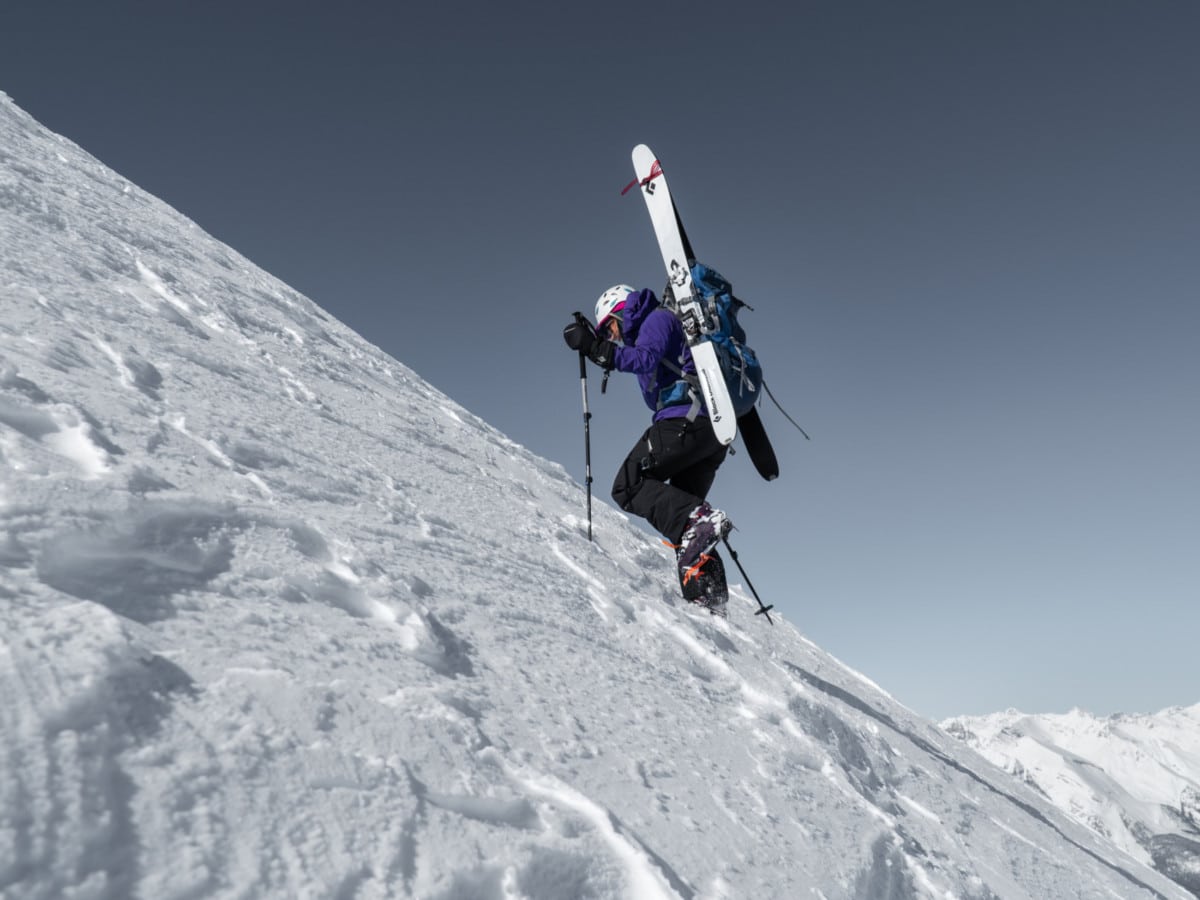
Choosing the right size backpack for your body is crucial. Manufacturers often release gendered options in S-M and M-L based on your torso length. It’s best to try out different backpacks fully loaded at the store. I’ve got a slender figure with virtually no hips and a long torso. Finding a pack with a small hip belt but a long torso length has proven to be a challenge over the years.
The Overnight Hut Essentials
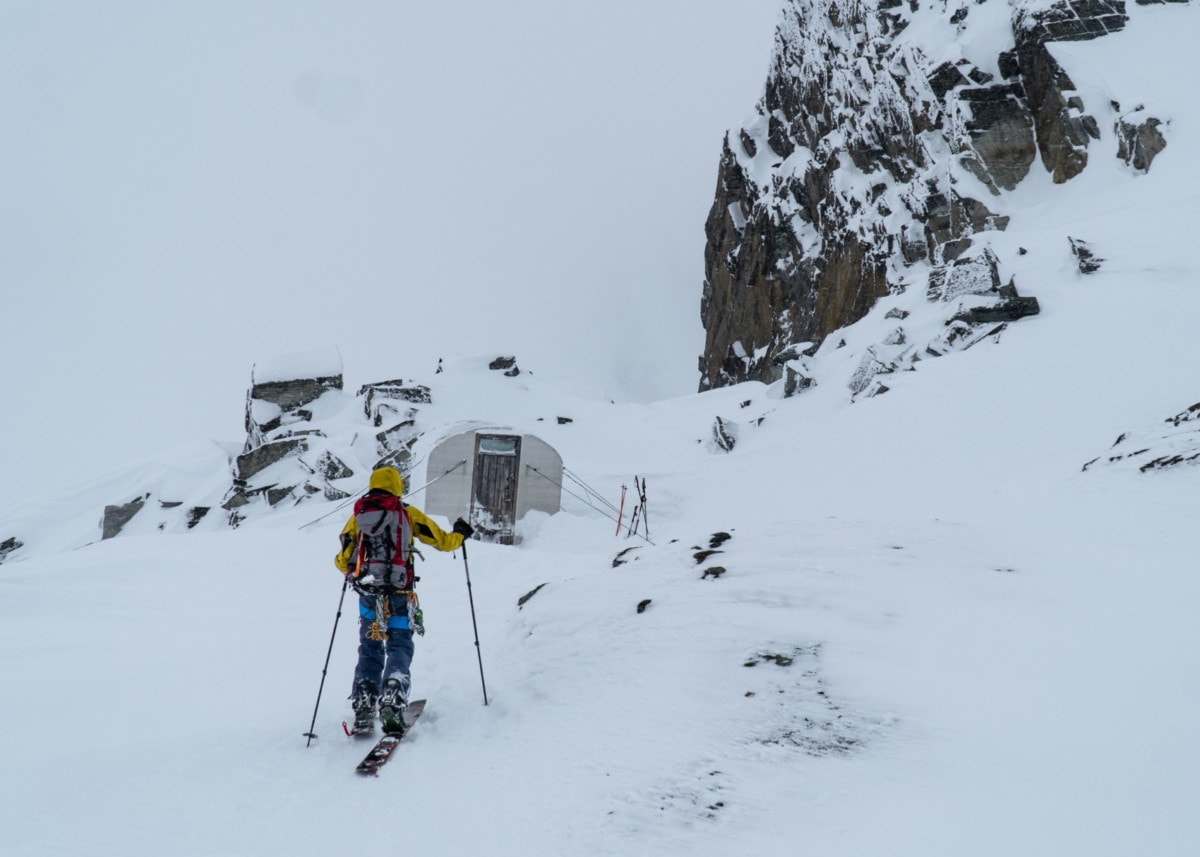
The way I see it: ski touring hut trips are demanding – accumulated fatigue and poor sleep affect my backcountry mental game. Having all the hut essentials to maximize comfort after hours will stack the odds in my favour when making life-saving decisions at 3000m. Before packing for your backcountry hut trip, research the backcountry huts you’ll be visiting. Nowadays, most huts are equipped with a wood or propane stove for boiling water and heating the interior space. You’ll still come across the oddball one, which is essentially a bare metal box anchored to a rocky cliff, somewhere up high in the alpine. Their location and amenities will determine the insulation requirement for hut-specific gear such as your sleeping bag and baselayers.
Sleeping bag: A lofty sleeping bag rated to at least -10C filled with down or synthetic insulation works wonders for ski touring hut trips. I prefer down insulation since it’s lighter and more compressible than synthetic insulation, keeping your pack weight and size down. On the flipside, down loses its loft and insulation potential when wet. Not much of a problem when you’ve got access to a heated hut.
Most huts are poorly insulated, with temperatures hovering close to freezing overnight. You’ll need a little more insulation than what you would find in a summer sleeping bag to stay warm. It’s also important to consider what the warmth rating stands for. A -10C sleeping bag is rated for a lower limit of -10C, where you’ll make it through the night, but not without a few shivers. The “comfort” limit for those bags is often closer to -3C depending on the bag’s insulation and design. You’ll find more information on winter sleeping bags in the post, Backcountry Winter Camping Gear For Alpine Touring.
Spare hut clothes: There’s nothing more satisfying than taking your drenched ski boots off and slipping into a fresh pair of socks. I recommend a spare set of merino baselayers and socks to wear in the hut and in bed. Merino wool is pure magic. It wicks moisture away from your skin and doesn’t hold on to odour – for the sake of everyone around you.
Hut shoes or booties: Insulated hut booties are key. I feel for the folks who keep their ski boots on in the hut after forgetting to pack their hut booties. It’s worth mentioning that keeping ski boots in the hut is bad etiquette – you’ll leave a wet mess all over the wood floors. I always bring insulated booties with integrated gaiters and a grippy sole, especially useful for shovelling a path to the outhouses. To keep the smell at bay, outhouses are often separate from the sleeping and cooking quarters.
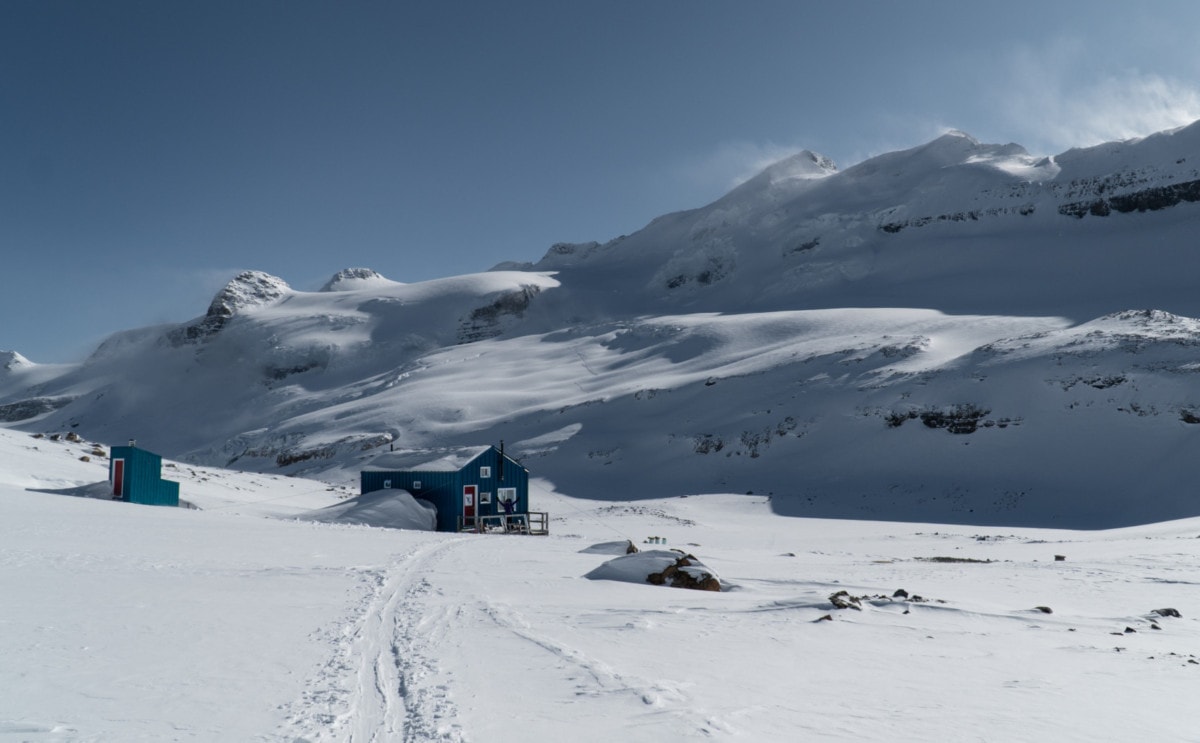
Inflatable pillow: The true ultra-light alpinists out there will shun me for this. I will not compromise on my sleeping system. While you can make a good-enough pillow by stuffing your down jacket into your sleeping bag stuff sack, I prefer a dedicated inflatable pillow that’s highly compressible and has a smooth face fabric for comfort. I never forget my trusty pillow when packing for a backcountry hut trip.
Stove: While most modern huts are equipped with a wood or propane stove, some huts require you to pack a small camp stove for cooking. If that’s the case, keep it simple and bring food prep to a minimum – boiled water, dehydrated rations, and no dishes.
Food and drinks
Food and water intake for a ski touring hut trip depends on your own needs. I don’t need much to get by, but that’s often not the case for most folks. To keep pack weight and size down, I stuff a sil-nylon compression sack with dehydrated food and powered drinks. Doing so, you’ll mostly avoid doing dishes.
- For breakfast: oatmeal crowned with raisins, cranberries, figs, butter and brown sugar, sealed in individual ziplock bags. Pro-tip: freezer bags can handle boiling water, so you won’t need to do dishes after breakfast. The extra butter will give you plenty of calories throughout the day. I also bring powdered coffee or tea.
- For lunch: pepperoni sticks, nut mix, and chocolate to be consumed during your tour with 1.5-2L of electrolyte water.
- For an appetizer at the hut: a warm, salty miso or chicken broth on the menu to reset your electrolytes and warm your core.
- For dinner: a dehydrated ration such as the one offered by Peak Refuel works wonders. Simply add water and you’ve got a tasty, healthy meal. The dehydrated packets are pricy, but are crammed with calories, more so than the competition. Chocolate and candy are a great way to end your meal with a sweet bang.
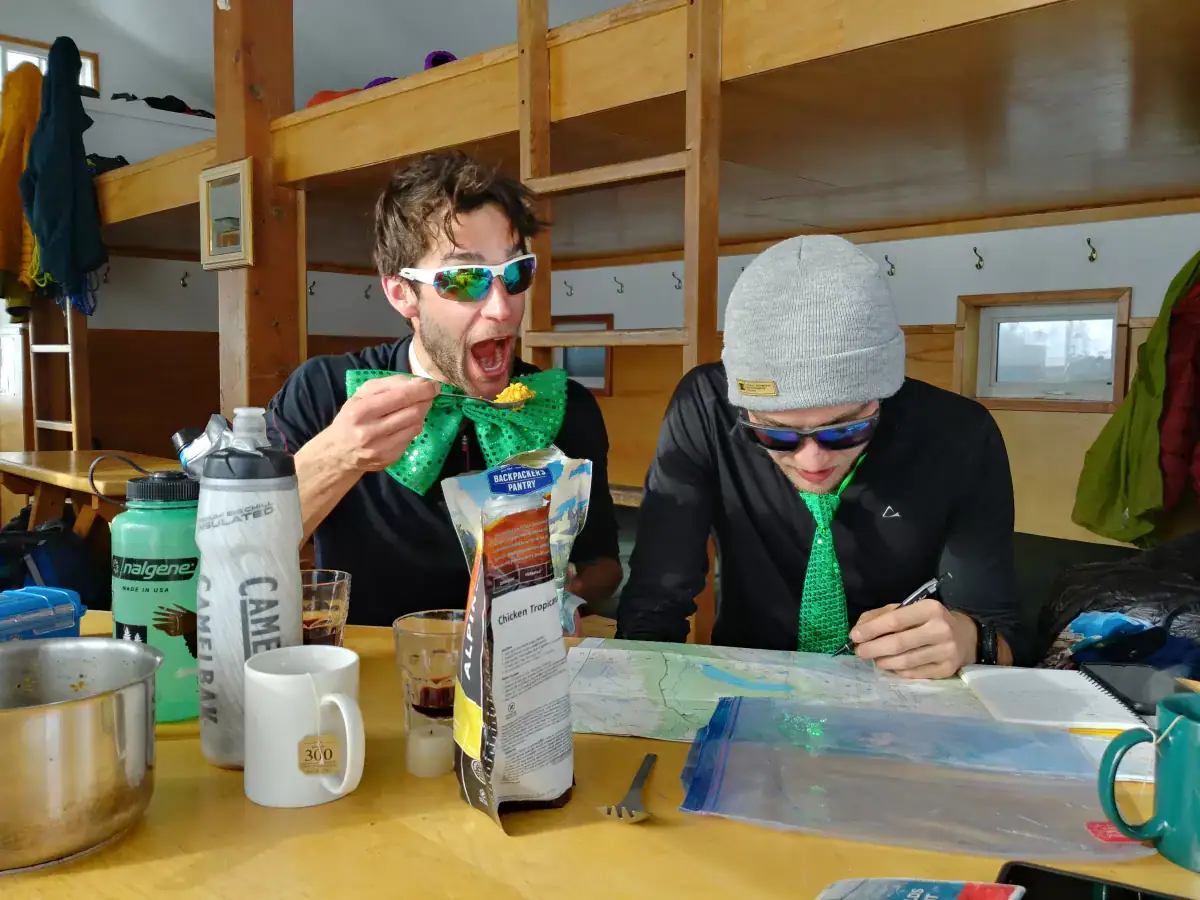
First thing in the morning, I drink plenty of water. I’m often dehydrated from the previous day’s effort. It’s best to start your tour hydrated, so you’ll be more efficient on the uptrack and drink less throughout the day.