

Are you getting excited for the ski season? At the time of writing, it’s 26 °C outside on a bluebird day. I’ll tell you – I can’t wait for the cold weather to roll in. In Revelstoke, there’s this special time of the year, usually in late October, that you can both ski in the alpine and bike in the valley on the same day. It’s a truly exhilarating experience. In fact, your timing has to be perfect! This will only last a few weeks at best. This begs the question: where should I go ski touring or splitboarding? On this note, let me introduce Revelstoke’s best early-season backcountry skiing spots for the eager beavers chasing a multi-sport day or the folks looking for the rare October powder. Pull your rock skis out of the shed, bring your VHF radio, and start dodging the sharks lurking underneath the pristine white canvas.
Related: The Early Season Snowpack: How It Affects Your Winter
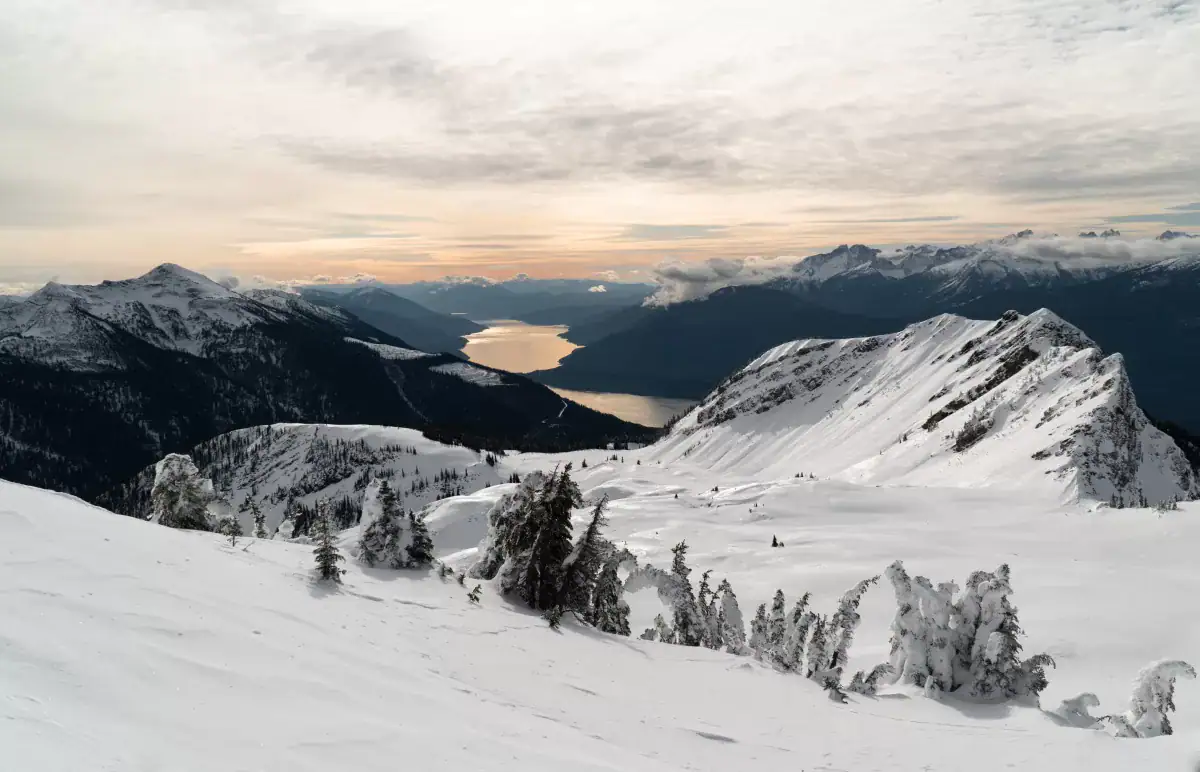
McCrae Peak
Best time to visit: Mid-October to early November
 |  |  |  |
| 5-6 h | 820 m | 10.5 km | 1770-2415 m |
As far as early-season ski touring goes, the McCrae Peak zone is an all-time classic. Its main glacier, the McCrae glacier, offers an enjoyable yet short descent, with a challenging finish down a windy canyon. For added vertical, you can bootpack up the peak’s west face to its summit (2500m), granting you panoramic views of the surrounding Selkirk Mountains and the Monashees’ Gold Range across the Columbia Valley. Why is this such a popular early-season spot? On one hand, you’ll start your tour at an elevation of just under 1800m at the top of the McCrae forestry road. You essentially drive all the way up to the snowline, skipping the typically heinous valley bottom bushwhack. Since the McCrae FSR is part of the broader Akolkolex forestry road network, bring a VHF radio along to monitor the busy logging traffic. This is an active logging zone, requiring a 4×4 vehicle to access. Check out this post about safety on forest service roads in BC.
Related: McCrae Glacier: Season’s First Powder Turns
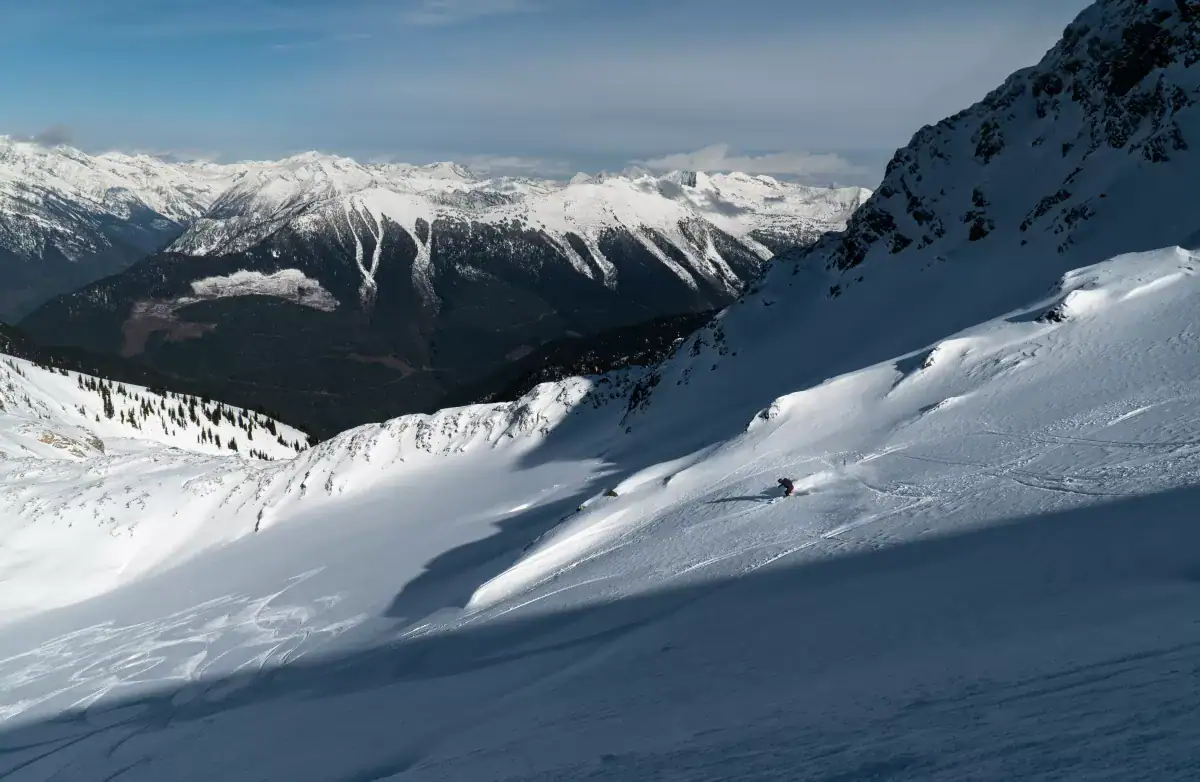
On the other hand, McCrae’s west shoulder is a mellow grassy meadow, with more grass than rocks, perfect for some early-season backcountry skiing. For the keen adventurer, you can complete a variety of intricate loops involving alpine bowls and steep chutes as seen in my latest trip up McCrae Peak in spring.
Joss Mountain
Best time to visit: Mid-October to early November
| | | |
| 5-6 h | 650 m | 12.5 km | 1490-2150 m |
Peaking at 2386m, Joss Mountain is a prime early-season ski touring spot in the Monashee Mountains. The route requires a 4×4 vehicle and a VHF radio to navigate the generally well-maintained Wap Lake FSR. Beware: the journey’s last leg up one of the lesser-used branches is much steeper and rockier than the main artery. The challenging access is worth the effort, however. You’ll be rewarded with classic Monashee-style skiing, including chutes, pillows, booters and pristine alpine bowls. Thankfully, the 1-hour drive from Revelstoke and the harder access make Joss Mountain a lesser-known destination, a hidden gem. You’ll hardly cross anyone on the uptrack.
Related: Joss Mountain: Monashees: Seeking The Halloween Powder
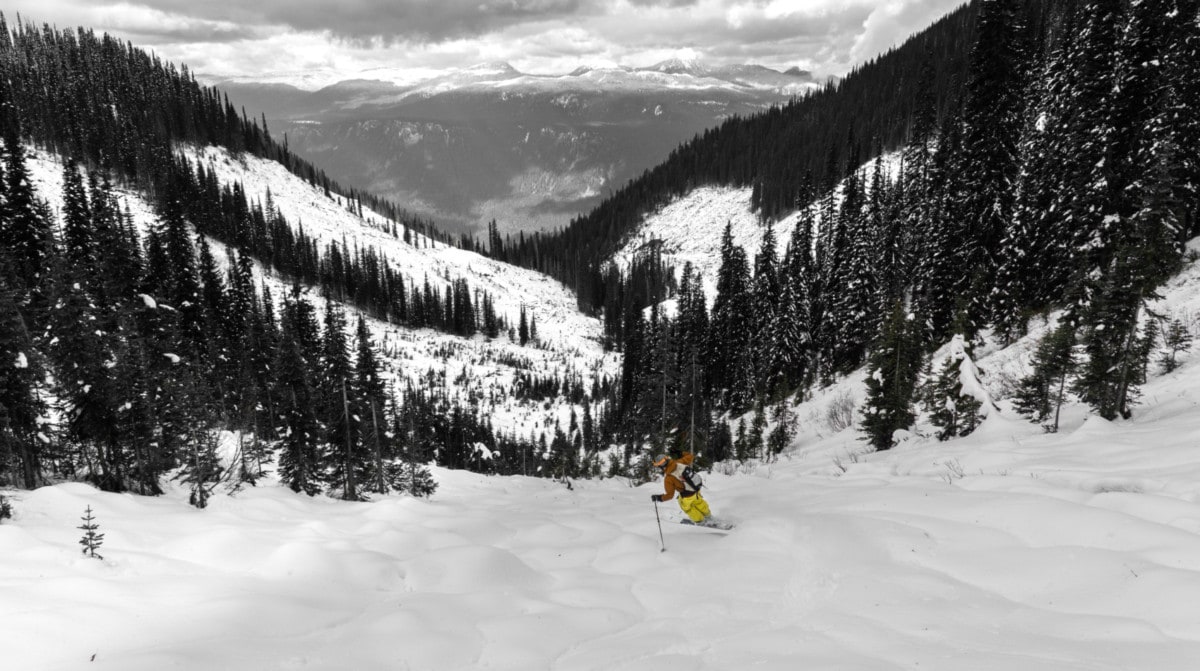
The peak is crowned by an old fire lookout, worth the visit if you can muster the 850m ascent. With a little exploration, you’ll find that the south bowl harbours quality skiing. The ondulating alpine terrain offers a perfect opportunity to ski multiple laps, dust off the cobwebs and get your touring legs under you.
Rogers Pass
Rogers Pass winter permit required
Best time to visit: Early November to mid-April
If you’ve been lurking on The Uptrack for a while, you’ve probably figured it out. Rogers Pass is a world-class backcountry skiing destination that also delivers the goods in the early season. The ski season usually starts in early November in the Connaught Valley when there’s just enough snow for a marginal ascent and a hair-raising descent. I’m not going to sugarcoat this – October/November skiing at Rogers Pass is no joke. You’ll be hopping over sharp rocks, crossing open creeks and bashing alder bushes along the way. Nonetheless, the challenging valley bottom conditions give way to excellent skiing in the alpine bowls.
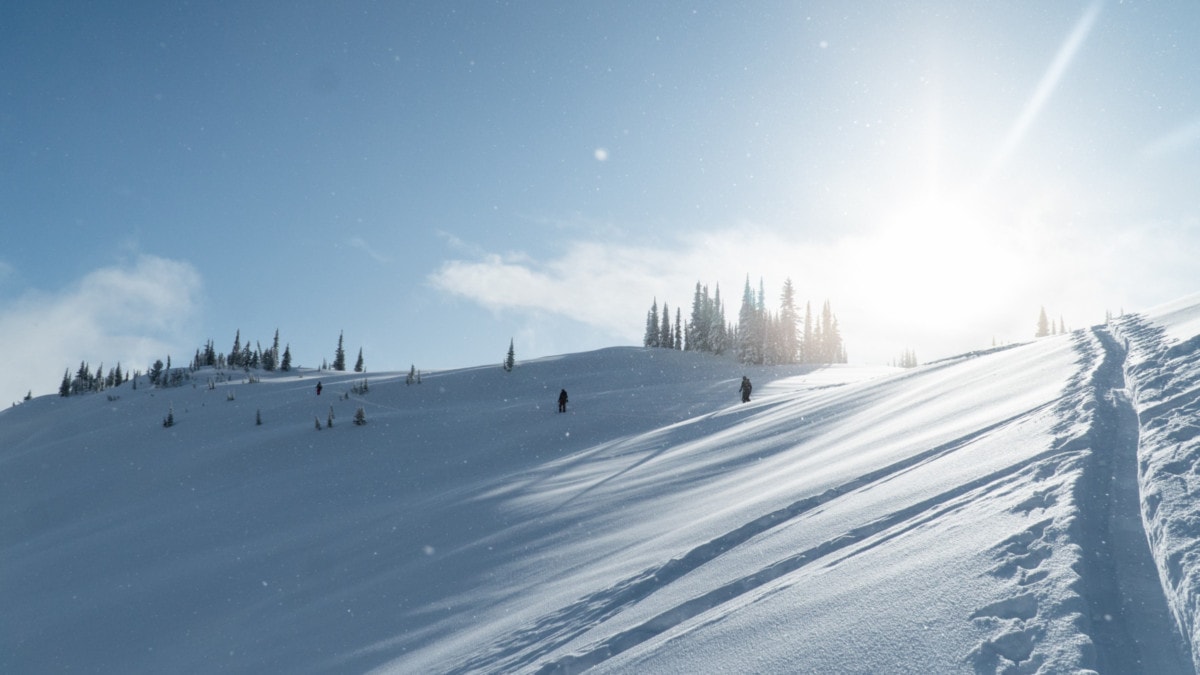
Most folks begin their season in the Connaught Valley with the Balu Pass ski tour. The gentle valley ascent, combined with the mellow open slopes at the valley’s headwaters, makes for a great first tour of the year. I’ve had some of my finest November faceshots there. For the expert skiers looking for challenging lines, a short climb from Balu Pass up the Cheops West Shoulder gets you to the entrance of Nicci’s Notch and the Cheops North Bowl on the valley’s south slope, two great options for early-season backcountry skiing.
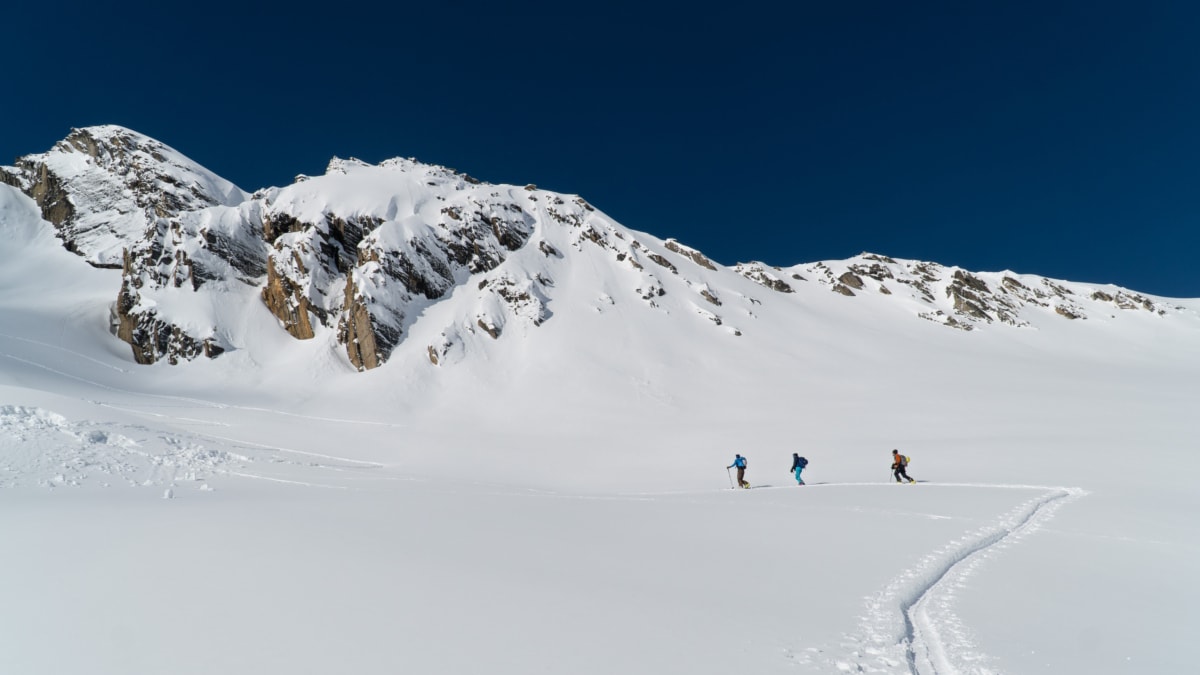
On the north side of the Connaught Valley lies Ursus Trees, offering perfectly spaced tree skiing that can be lapped over and over again. Skiers and snowboarders with a penchant for mountaineering can easily summit Video Peak and ski down its south face. It’s a classic early-season objective. You’ll find some great alpine skiing in the vast Hospital Bowl below the peak. Beware: the valley’s lower slopes are carpeted with thick alder bushes, making progress difficult. Stick to the well-used uptracks below treeline to ease your ascent.
Dusting Off The Cobwebs
Since we’re talking about early-season backcountry skiing, it’s worth mentioning the steps you can take to get ready for the season. My latest pre-season preparation for ski touring post discusses those very steps, ranging from looking over your gear to physical conditioning for the season. I spend considerable time training my avalanche and crevasse rescue response before even clipping into my bindings for the first time of the year. You never know – you might be faced with an incident on your very first day out in the backcountry, and you must be ready for it.
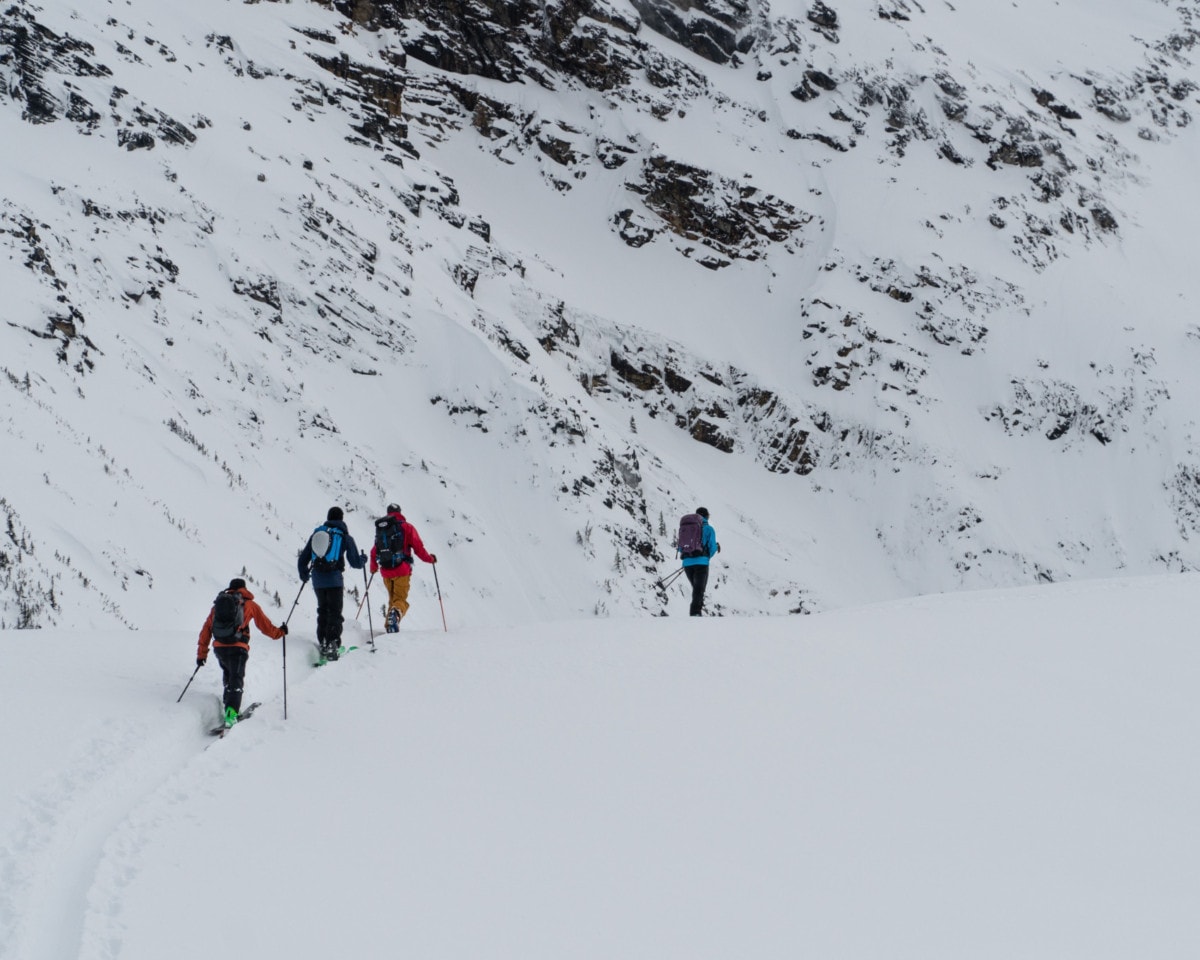
Let’s be honest with ourselves: our first packing party of the year is often a rusty one. I’m slowly packing my backpack in the least effective way possible, often forgetting essential items. Well, look no further. This handy-dandy post on what to pack for a ski tour covers all the gear you’ll need for your first ski tour in October or November.
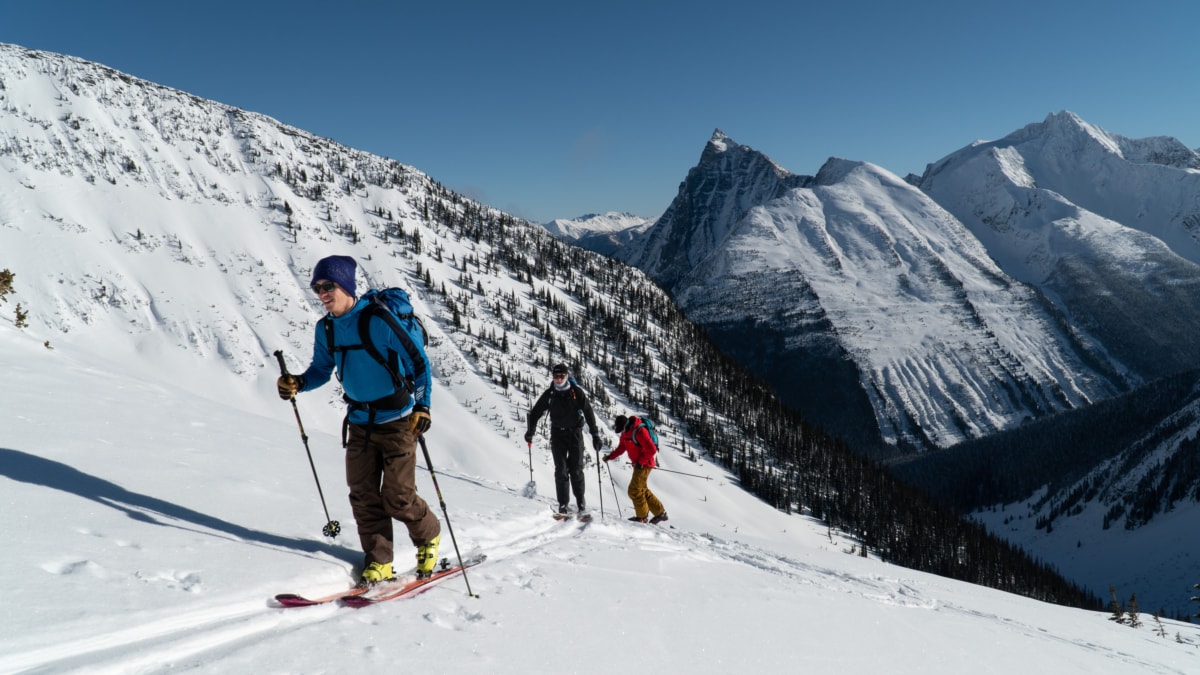
Lastly, not only is it good advice to practice avalanche safety scenarios before hitting the backcountry slopes, it’s also crucial to review the common avalanche problems encountered in October and November. This post on the early-season snowpack covers the fundamental weather mechanisms and avalanche problems that take shape in the early parts of the winter.